
Budget Friendly Exercise Routines for Remote Workers
When I started looking for budget friendly exercise routines for remote workers, I was broke, stiff, and honestly a little desperate. My back ached from eight hours hunched over a kitchen table. My “commute” was twelve steps from bed to laptop. Sound familiar? I gained fifteen pounds in my first year working remotely and spent zero dollars on a gym membership because, well, I couldn’t justify the cost. What I found instead changed everything, and my wallet never noticed.
1. Bodyweight Circuits Between Meetings
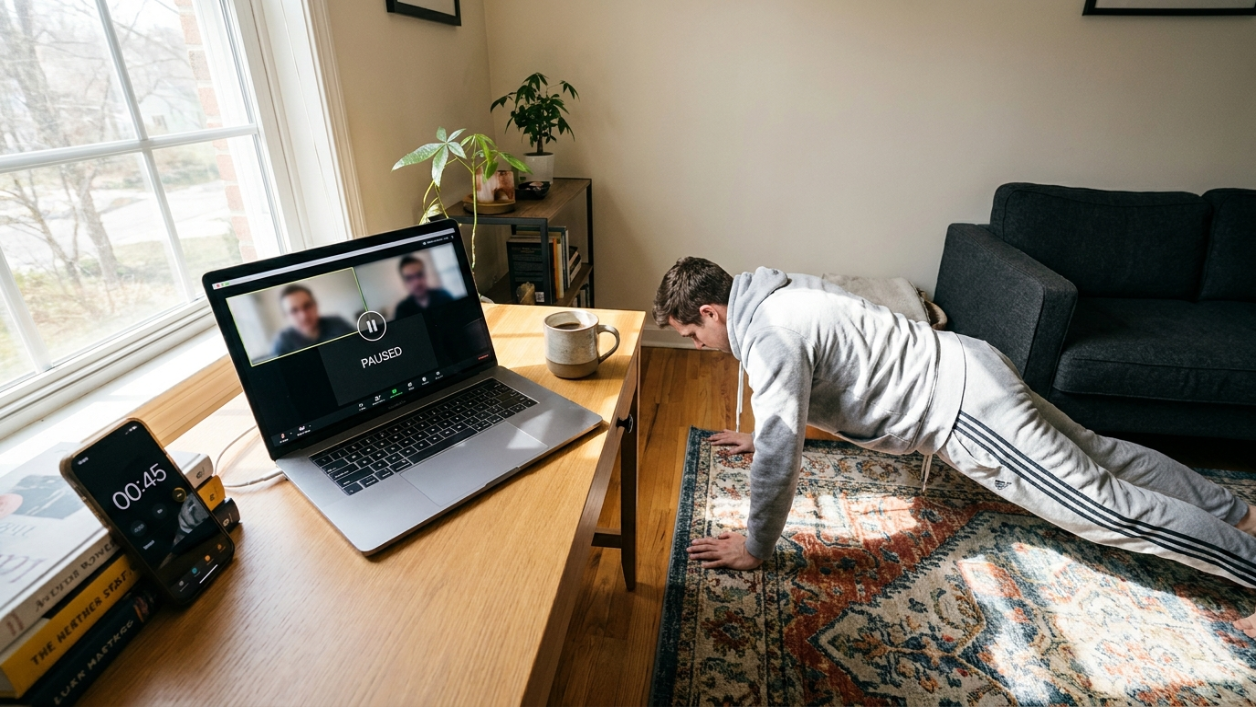
You already own the best piece of exercise equipment on the planet: your body. I started doing quick bodyweight circuits in the five to ten minute gaps between Zoom calls, and the results surprised me more than anything I’ve done at a gym.
A simple rotation of push-ups, squats, lunges, and planks takes about seven minutes. No equipment. No shoes required. I literally do these in my socks on the living room floor. The key is consistency over intensity. Three rounds between meetings adds up to 20+ minutes of real work by lunchtime, and you never have to change clothes or leave your house.
2. YouTube Yoga Sessions (Totally Free)
Yoga With Adriene on YouTube has over 12 million subscribers for a reason. Her videos are free, range from 10 to 45 minutes, and she has specific routines for desk workers with tight hips and rounded shoulders. I was skeptical at first because yoga felt “too gentle” to count as exercise.
I was wrong. After two weeks of her 30-day challenge, my lower back pain dropped dramatically. My focus during afternoon work blocks improved too. The cost? Literally zero. You don’t even need a yoga mat. A folded towel on carpet works fine, and I used one for months before upgrading.
Also Read: Best Workout Plans for College Students 2026
3. Resistance Bands Instead of Dumbbells
A full set of resistance bands costs between $10 and $25 on Amazon. I bought a set from Fit Simplify almost three years ago and they still hold up. These little rubber loops replaced an entire rack of dumbbells for me, and they fit in a desk drawer.
Banded squats, shoulder presses, bicep curls, rows, and lateral walks give you a legitimate full-body workout. I keep mine draped over my office chair as a visual reminder. When I hit a mental wall around 2 PM, I grab them and knock out a 15-minute upper body routine. The resistance is real, and the soreness the next day proves it.

4. Walking Meetings Are Underrated
This one costs nothing and actually makes you better at your job. Whenever I have a phone call that doesn’t require screen sharing, I take it outside. I walk around my neighborhood at a comfortable pace and just talk.
On a busy day, I’ve logged 4,000 to 6,000 steps just from walking meetings alone. Fresh air clears the brain fog that builds up from staring at screens. I’ve had some of my best brainstorming sessions while walking past my neighbor’s overgrown garden. If your role involves any phone-based conversations, try converting just two per week into walking meetings. You’ll feel the difference fast.
5. The Staircase Workout Nobody Talks About
If you have stairs in your home or apartment building, you have a free cardio machine. I do stair sprints during my lunch break, running up and walking down for ten rounds. It takes about eight minutes and absolutely destroys my legs and lungs.
For variety, I’ll do step-ups, calf raises off the bottom stair, or incline push-ups with my hands on the third step. A staircase is versatile enough to build a full routine around. It’s not glamorous. Nobody’s posting staircase workouts on Instagram. But it works, and that’s all I care about.

6. Free Fitness Apps That Deliver Real Results
Nike Training Club went fully free a few years ago, and it’s genuinely one of the best fitness apps available. The workouts range from 15 to 45 minutes, cover strength, endurance, mobility, and yoga, and require minimal or no equipment.
I also recommend the FitOn app, which offers guided video workouts with real trainers. Both apps let you filter by time, difficulty, and equipment so you can find routines that match your exact situation. As a remote worker with a tight schedule and tighter budget, these apps gave me structure without costing a dime. They removed my biggest excuse: not knowing what to do.
7. Desk Stretches You Can Do Every Hour
Sitting for eight hours straight is genuinely terrible for your body. I set a recurring timer on my phone to go off every 60 minutes, and when it buzzes, I stand up and stretch for two minutes. Neck rolls, chest openers, hip flexor stretches, and wrist circles for all that typing.
This habit alone reduced my neck tension by at least half. It’s not a full workout, but it prevents the damage that long sitting sessions cause. Think of it as maintenance. You wouldn’t drive a car 200,000 miles without an oil change, so stop treating your body that way. Two minutes per hour adds up to 16 minutes of stretching across a workday.
Budget Friendly Exercise Routines for Remote Workers on a Weekly Schedule
Knowing what to do is one thing. Knowing when to do it is another. Here’s the exact weekly schedule I follow, and it costs me under $25 total (the price of those resistance bands I mentioned).
- Monday: 20-minute bodyweight circuit (push-ups, squats, lunges, planks)
- Tuesday: 30-minute YouTube yoga session (Yoga With Adriene)
- Wednesday: 15-minute resistance band upper body workout
- Thursday: Walking meetings plus staircase sprints at lunch
- Friday: 20-minute Nike Training Club session (I pick “no equipment” filter)
- Saturday: A longer walk or hike, 30 to 60 minutes
- Sunday: Rest and gentle stretching
This schedule keeps things varied enough that I never get bored. I rotate specific videos and exercises every few weeks so my body doesn’t adapt too quickly. The whole system runs on zero monthly fees.
Why Remote Workers Need Intentional Movement
Office workers get movement baked into their day without thinking about it. Walking to the parking lot, taking the elevator, strolling to a conference room. Remote workers lose all of that. I tracked my steps during my first month working from home and averaged 1,800 per day. That’s frighteningly low.
Budget friendly exercise routines for remote workers aren’t just about fitness or looking good. They’re about preventing the real health consequences of a sedentary lifestyle: chronic back pain, poor circulation, weight gain, mental fog, and long-term risks like heart disease. Building intentional movement into your day is a form of self-preservation. I don’t say that to be dramatic. I say it because my doctor said it to me, and she was right.

Gear You Actually Need (and Gear You Don’t)
You don’t need a Peloton. You don’t need a home gym. You don’t need matching workout sets from Lululemon. Here’s what I actually use and recommend:
Worth buying:
- Resistance bands ($10 to $25)
- A decent water bottle ($10 to $15)
- Comfortable shoes for walking meetings ($0 if you already own sneakers)
Skip these:
- Adjustable dumbbells (great but expensive, $100+)
- Fitness trackers (helpful but not necessary to start)
- Online coaching subscriptions (free apps cover this)
Total startup cost for everything on the “worth buying” list is under $40, and honestly, you could start with just the bands and a glass of water from your kitchen.
How to Stay Consistent When Nobody’s Watching
The hardest part of exercising as a remote worker isn’t the workout itself. It’s doing it when nobody holds you accountable. There’s no gym buddy. There’s no class schedule. There’s just you and your living room floor at 11 AM on a Tuesday.
I failed at consistency for months before figuring out what worked. The trick, for me, was anchoring exercise to an existing habit. I work out right after my morning standup meeting every day. That meeting happens at 9:15 AM without fail, so my workout starts at 9:30 AM without fail. I don’t rely on motivation. I rely on routine. Stack your exercise onto something you already do every day, like finishing your first coffee or closing your laptop for lunch, and it becomes automatic.
Frequently Asked Questions
What are the best budget friendly exercise routines for remote workers who have no space?
You need less space than you think. If you can lie down flat with your arms extended, you have enough room. Bodyweight exercises, resistance band work, and yoga all fit in a 6-by-4-foot area. I’ve done full workouts in hotel rooms smaller than most closets. Prioritize movements that keep you mostly stationary, like squats, planks, and standing band exercises.
How many minutes per day should remote workers exercise?
The CDC recommends 150 minutes of moderate activity per week, which breaks down to about 22 minutes per day. That’s completely doable with short sessions between meetings. I aim for 20 to 30 minutes on weekdays and something longer on Saturday. Even 10 minutes is infinitely better than zero, so start small and build up gradually.
Can I really get fit without a gym membership?
Absolutely. I haven’t had a gym membership in over three years and I’m in better shape now than when I was paying $50 a month for one. Bodyweight training, resistance bands, walking, and free apps provide more than enough stimulus for general fitness. Unless you’re training for competitive bodybuilding or powerlifting, a gym is a want, not a need.
What’s the biggest mistake remote workers make with exercise?
Waiting for the “perfect” time. There’s no perfect time when you work from home because work is always right there. The biggest mistake is treating exercise as something separate from your workday instead of weaving it into the gaps. Five minutes between calls is better than an hour-long session you keep postponing until it never happens.
Do I need to buy a standing desk to stay healthy while working remotely?
A standing desk helps, but it’s not essential and it’s definitely not cheap. A simpler alternative is stacking books or a sturdy box on your regular desk to create a makeshift standing station. I used an IKEA lack table on top of my desk for a full year before buying a proper adjustable one. Movement matters more than standing still in a different position.
Conclusion
Staying active while working from home doesn’t require a gym, expensive equipment, or hours of free time. It just takes a little creativity and a willingness to move your body in the gaps your schedule already gives you. What’s the one routine from this list you’re going to try first?